.png)
Damp in a House: Causes, Health Risks & How to Fix It
Damp is one of the most common issues in UK homes — and one of the most misunderstood. The right fix depends on the type of damp you’re dealing with. Treating symptoms (like repainting or bleaching mould) might make things look better for a week or two, but it won’t solve the underlying problem.
This guide will help you:
Spot the early warning signs
Work out what type of damp you may have
Understand the health risks
Take practical steps to fix it (and stop it coming back)

First: what type of damp is it?
Most damp problems fall into three categories. Getting this right saves a lot of wasted money.
Condensation (the most common): moisture from everyday living settles on cold surfaces.
Penetrating damp: water is getting in from outside (or through the building fabric).
Rising damp: moisture rising from the ground through walls (less common than people think, but it does happen).
If you’re unsure, start with the signs below and the common causes — you can usually narrow it down quickly.
Signs of damp (what to look for)
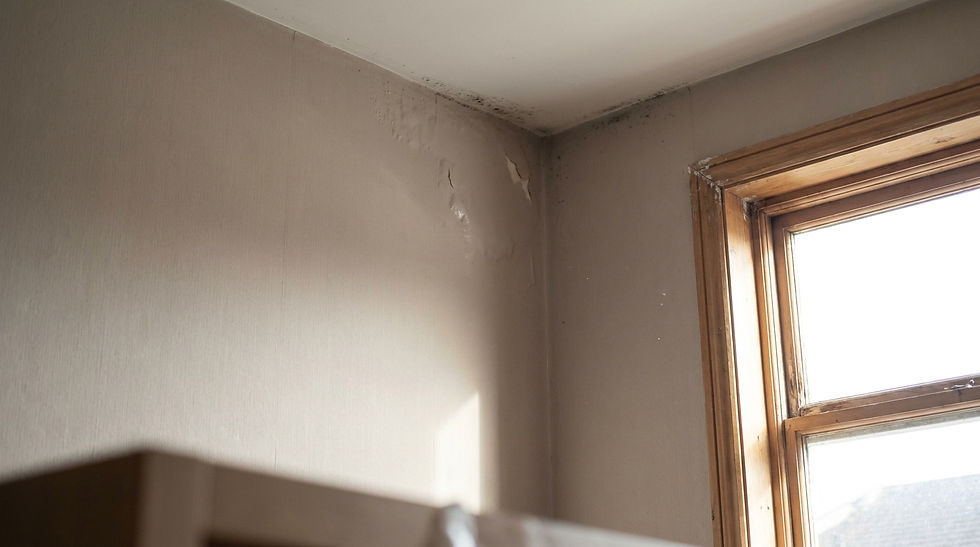
Condensation on windows (especially mornings) and damp corners
Black mould around windows, behind furniture, or on cold external walls
Peeling paint / bubbling wallpaper
Musty smell that doesn’t go away
Damp patches that get worse after rain
Salt-like marks on plaster or skirting-level staining
Crumbling plaster or rotting timber (a sign the issue has been there a while)
Condensation: causes + fixes

Best clue: mould and moisture on cold surfaces, often in bedrooms, bathrooms, kitchens, and corners.
Common causes:
Drying clothes indoors
Inadequate extraction in bathrooms/kitchens
Poor airflow (sealed windows, blocked vents)
Cold bridging (very cold spots on walls/ceilings)
Practical fixes:
Use extraction properly: run bathroom/kitchen extractor fans during and after use.
Heat + ventilate: a consistently warmer home reduces cold surfaces where moisture condenses.
Create airflow: trickle vents, opening windows briefly, and keeping internal doors open when appropriate.
Move furniture off external walls: even 50–100mm helps air circulation.
Dehumidifiers: helpful as a short-term support, but don’t rely on them as the only fix.
Penetrating damp: causes + fixes

Best clue: damp patches that worsen after rain, often on external walls, chimneys, or around openings.
Common causes:
Blocked or leaking gutters/downpipes
Cracked render, missing pointing, damaged bricks
Defective roof coverings/flashings
Leaks around windows/doors
Practical fixes:
Check gutters first: it’s one of the most common causes and often the cheapest to fix.
Inspect external walls for cracks, failed pointing, or porous areas.
Look for roof issues (especially around chimneys, valleys, and flashings).
Check seals around windows/doors.
If the damp is persistent, it’s worth a professional inspection — penetrating damp can mimic other issues.
Rising damp: causes + fixes

Best clue: damp and staining at low level (typically up to around 1m), with salt deposits and decaying skirting/plaster.
Common causes:
A missing, bridged, or failed damp-proof course (DPC)
External ground levels too high (soil/paving bridging the DPC)
Practical fixes:
Check external ground levels and remove bridging where possible.
If a DPC has failed, you may need specialist remedial work.
Note: many “rising damp” diagnoses are actually condensation or penetrating damp — diagnosis matters.
Can damp affect your health?

Yes — especially when damp leads to mould growth.
People most at risk include children, older adults, and anyone with asthma or respiratory conditions.
Common health impacts:
Worsened asthma and breathing issues
Persistent coughs/chest infections
Skin irritation (including eczema)
Fatigue/headaches for some people in heavily mould-affected environments
If there’s visible mould, treat it seriously — but focus on the cause (ventilation, leaks, cold surfaces), not just cleaning.
Quick “what to do next” checklist
Identify the pattern: after rain vs year-round vs after showers/cooking.
Check ventilation + extraction (bathrooms/kitchens/utility).
Inspect gutters and downpipes.
Look for external defects (pointing, render cracks, roof/flashings).
Review ground levels near external walls.
If it’s ongoing: get it assessed before you redecorate.
Need help fixing damp properly?
If you’re seeing damp or mould and want a long-term fix (not a cosmetic patch), we can help you work out the cause and the best route forward — whether that’s ventilation improvements, building repairs, or renovation work.


